


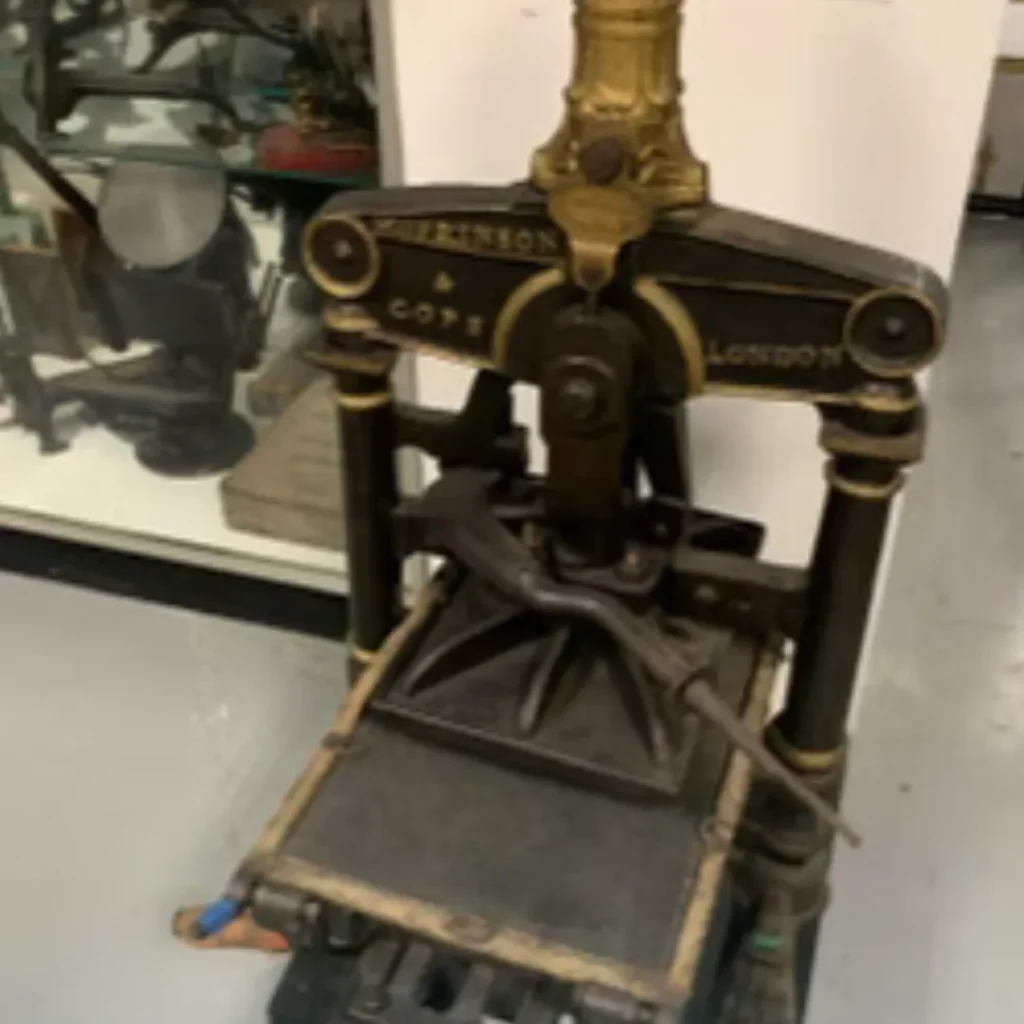

O- Table Top Screw
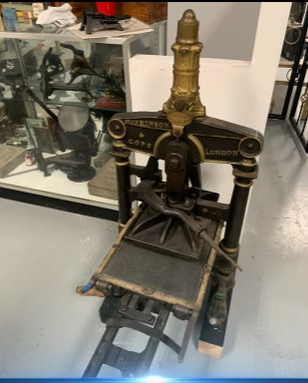
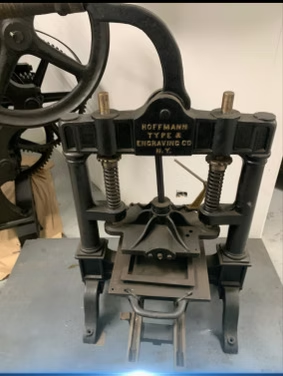
Table Top Screw Press
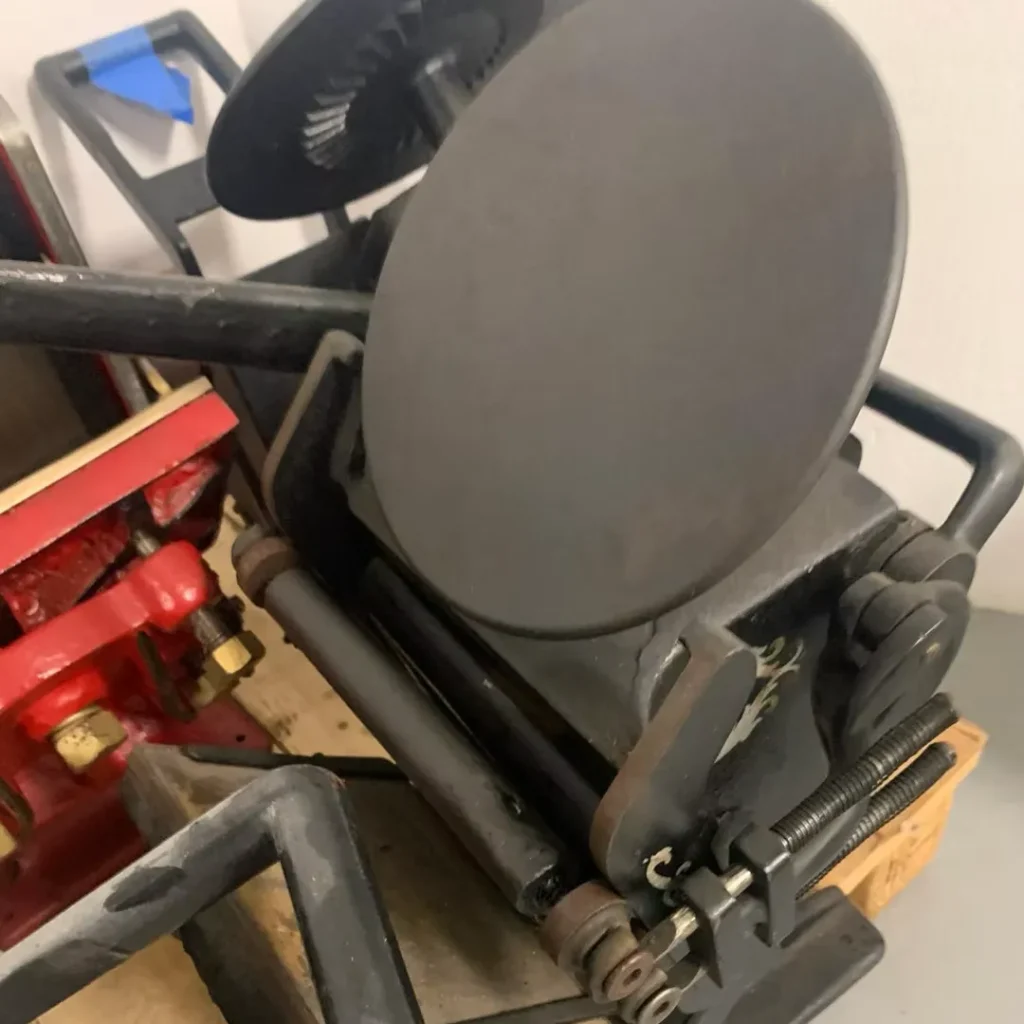
The table top screw press brought the traditional pressure-based printing method into a smaller and more manageable form. Built to sit on a sturdy table or workbench, this type of press allowed printers, educators, and craftspeople to use screw press principles without the size and weight of larger floor-standing machines.
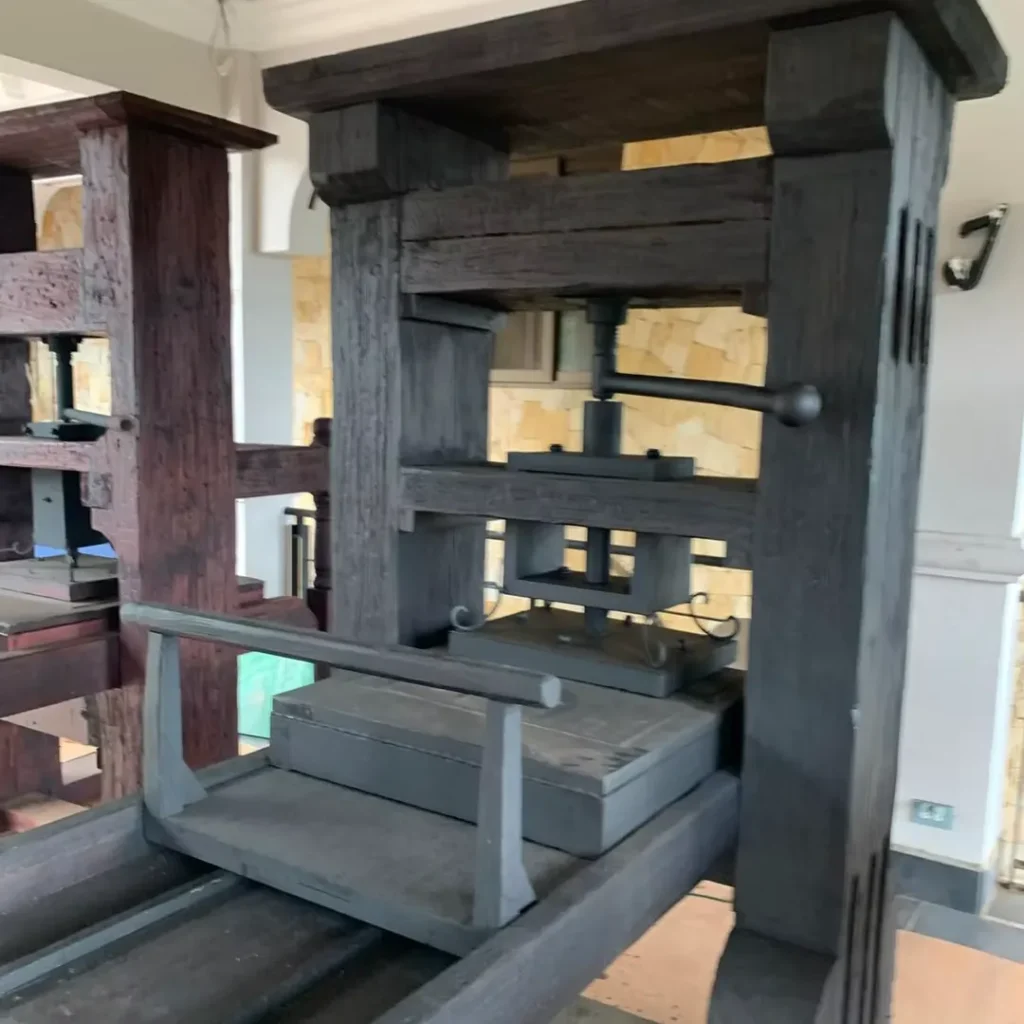
Like larger screw presses, the table top screw press used controlled downward pressure to transfer ink from type, plates, or blocks onto paper. The operator turned or adjusted the screw mechanism to press the printing surface evenly, creating an impression through careful alignment, steady pressure, and hands-on control.
These smaller presses were useful for demonstrations, short print runs, educational settings, specialty work, and smaller printed pieces. They helped make the process of printing easier to observe, teach, and practice while still preserving the basic mechanics that connected them to earlier historic press designs.
At Demers, Gutenberg, Franklin Museum, the table top screw press helps visitors see how printing technology could be scaled for smaller spaces while still reflecting the same principles that shaped early print history. It represents craftsmanship, accessibility, and the enduring value of hands-on printing.
Gallery
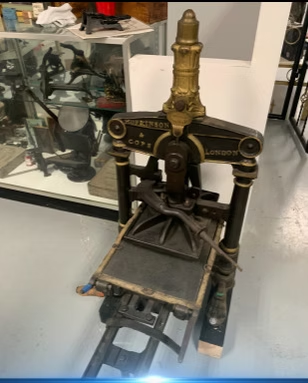
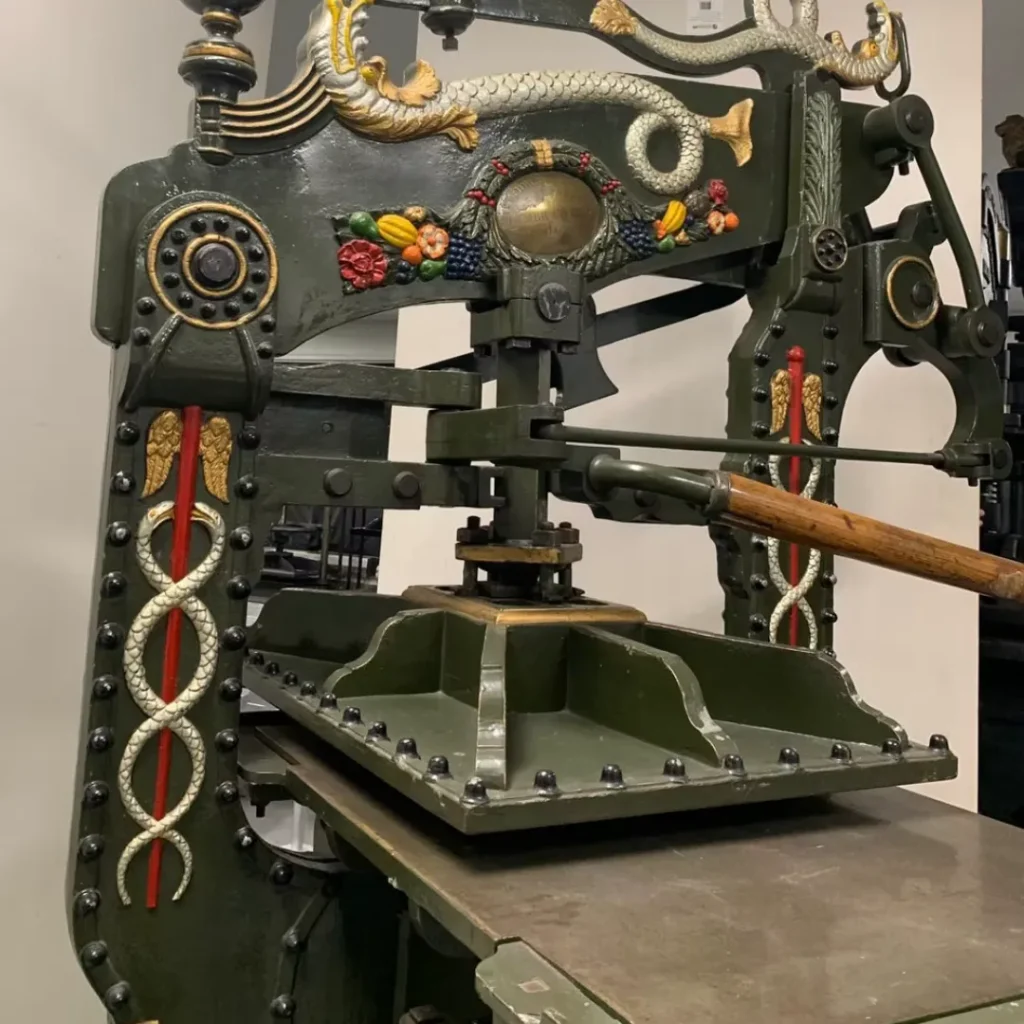
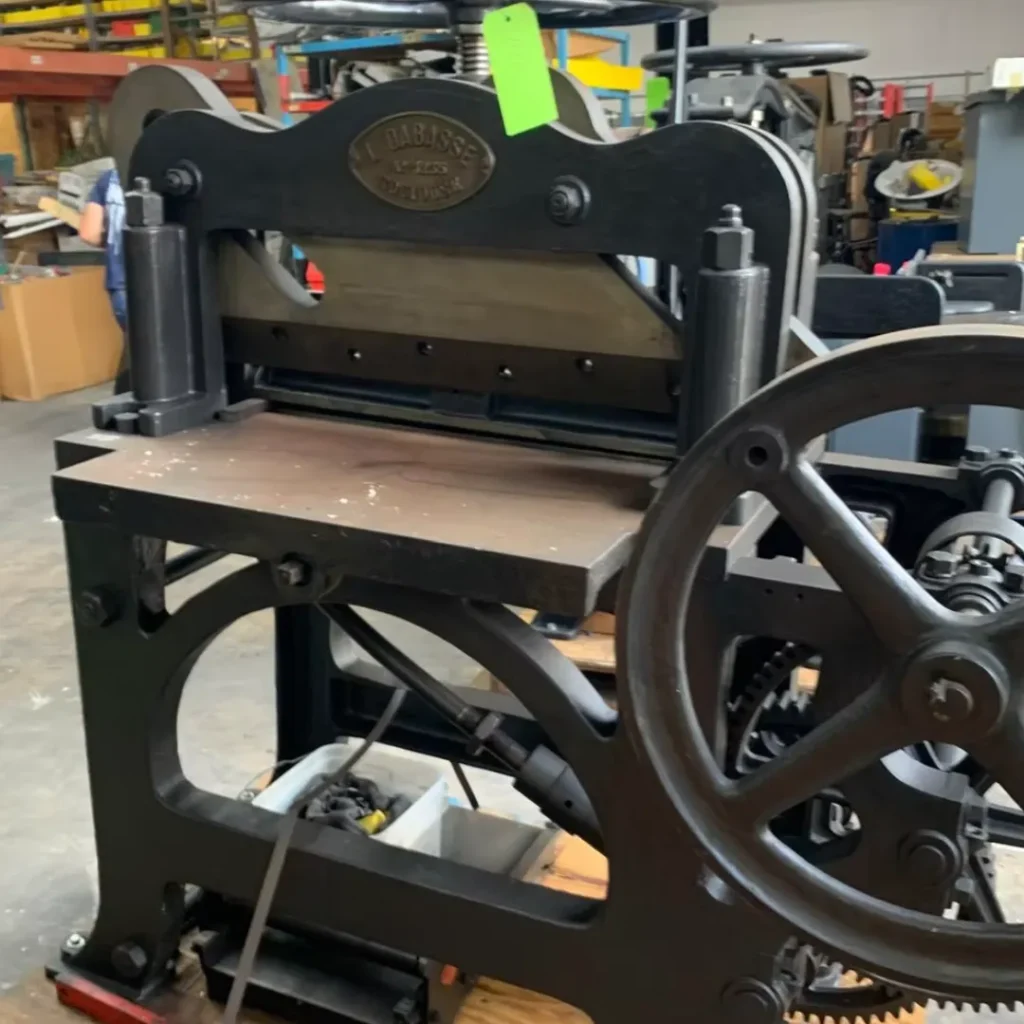
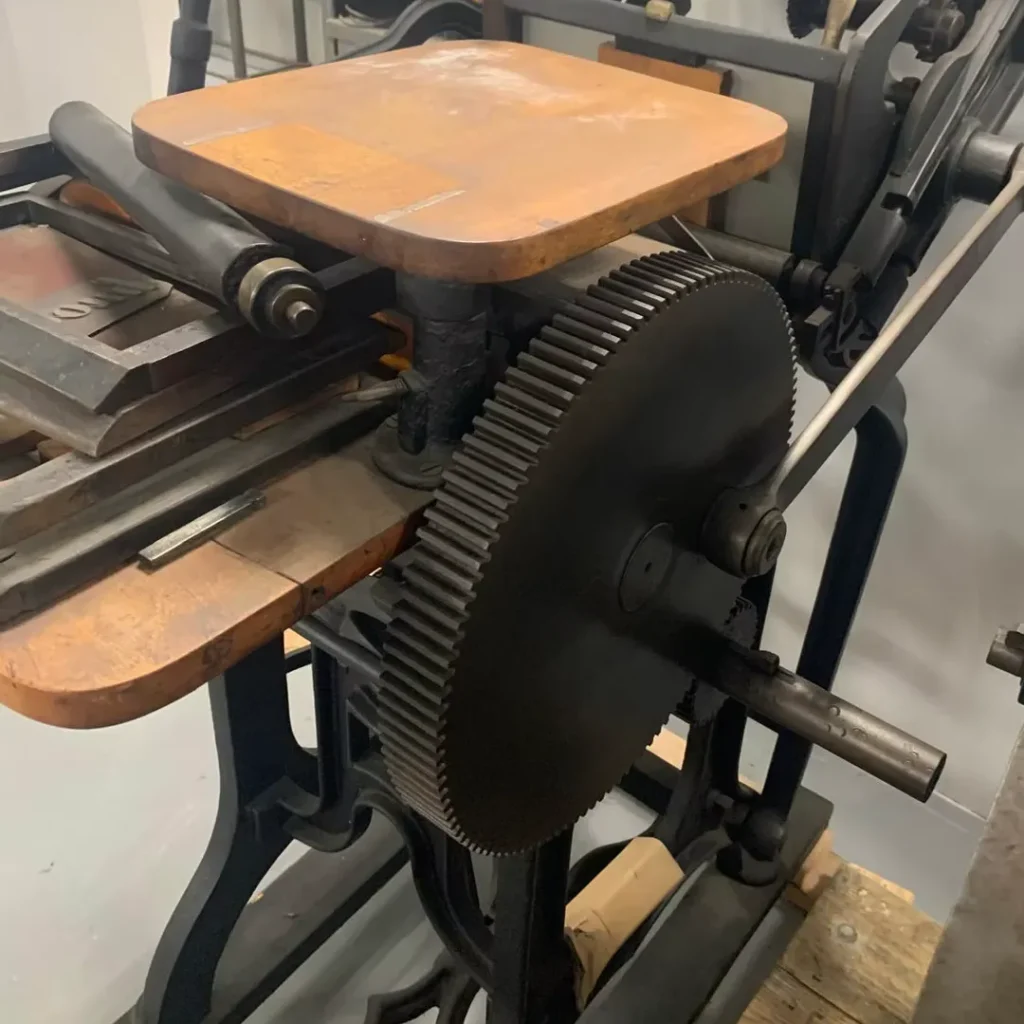
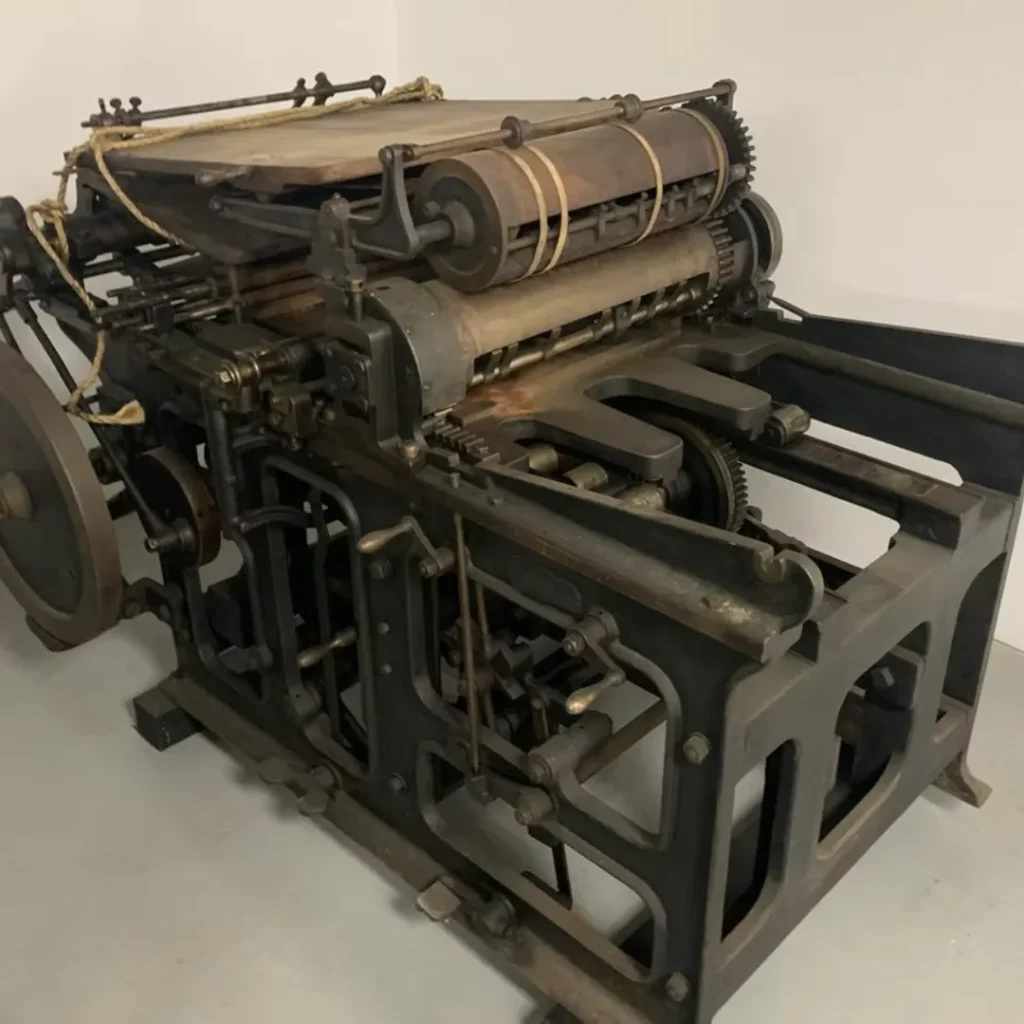
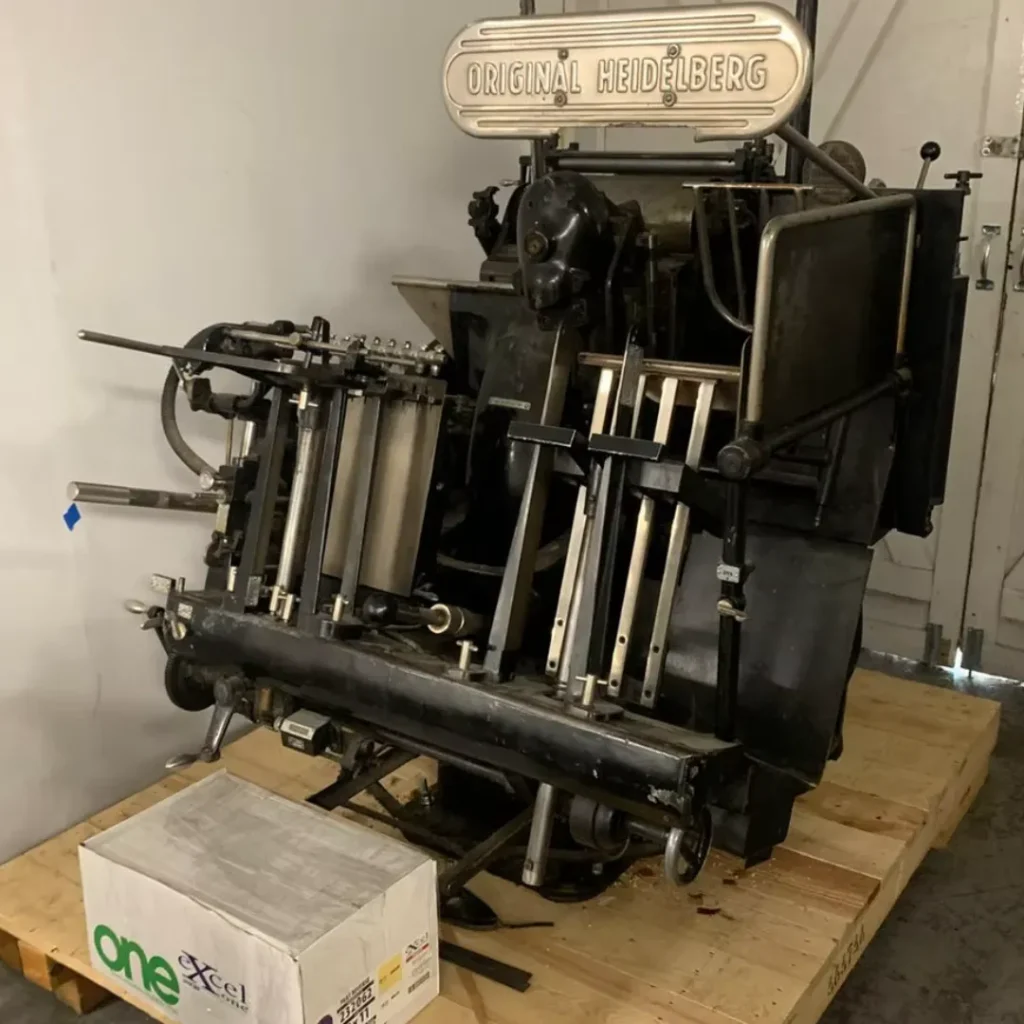
6-O-1 Cerca 1901, # 7059, Hopkinson & Cope, table top , London England