

L- Manual Typsetter

Manual Typesetter
The manual typesetter represents the skill and patience behind traditional printing before digital layout and modern automation. In early print shops, words were built by hand using individual pieces of type, carefully selected, arranged, spaced, and locked into place before printing could begin. Every line of text required attention to detail and a strong understanding of language, layout, and craftsmanship.
Manual typesetting was a precise process. Printers worked with type cases filled with letters, numbers, punctuation marks, and spacing materials. Each character had to be placed in reverse so it would print correctly on the page. This work demanded focus, steady hands, and years of practice to create clean, readable printed material.
Typesetters played a vital role in producing books, newspapers, posters, announcements, forms, and countless printed pieces used by communities and businesses. Their work shaped how information looked on the page, influencing readability, style, organization, and the overall quality of the finished product.
At Demers, Gutenberg, Franklin Museum, the manual typesetter helps visitors appreciate the human skill behind the printed word. It reminds us that printing history is not only about machines, but also about the hands, minds, and craftsmanship of the people who brought words to life one letter at a time.
Gallery

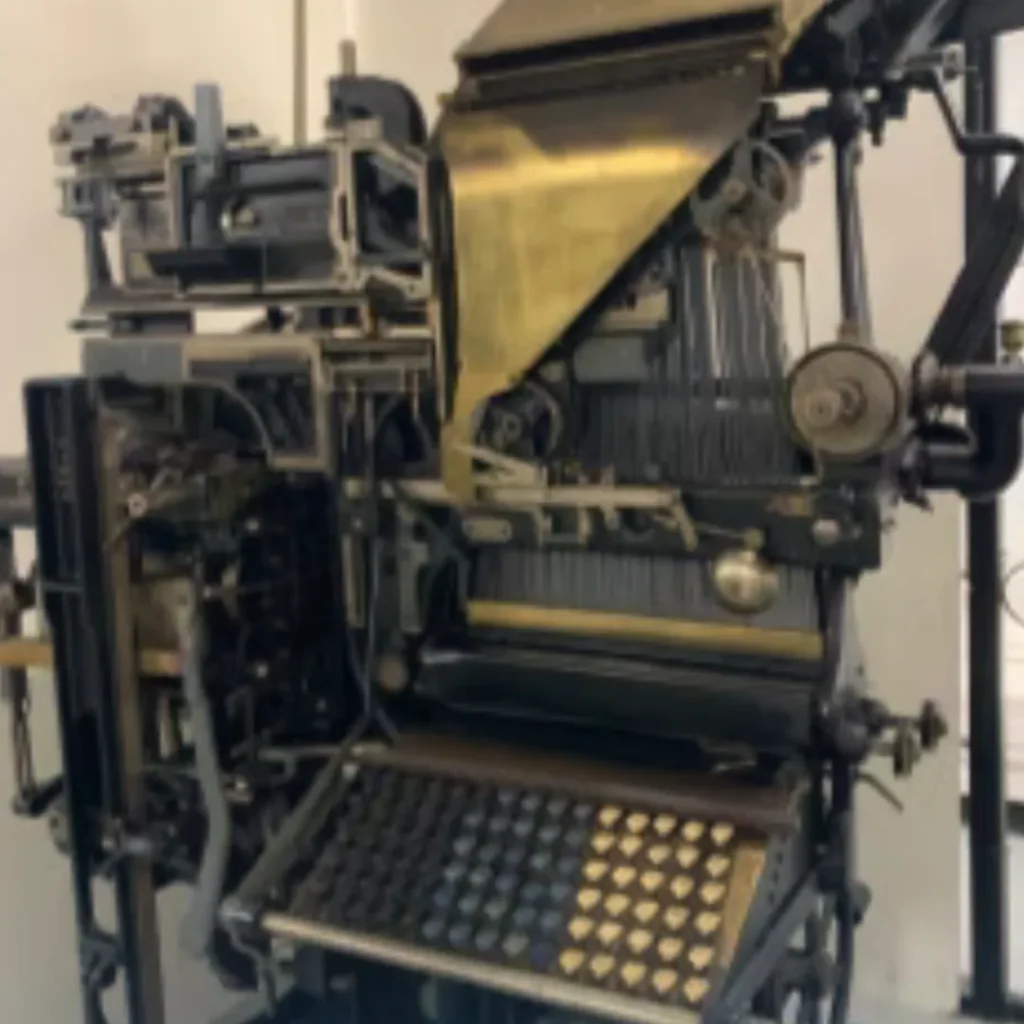
6-L-1 1915, Mergenthaler Linotype , Model A. Pine of mankind’s mist sucessful in entions

6-L-2 1964, Typograph GmbH , model UB # 7765, Seitzmaschine Fabrik, Berlin , Germany

6-L-3 July 1898, Lanston Monotype, Philadelphia, Pa usa patented

6-L-4 Cerca 1900, set o type , un known history, USA

6-L-5 Cerca 1930, Ludlow matrix cabinet , typographic mfg, chicago

6-L-6 Cerca 1900, Digraph stencil machine table top model, Somerville , mass
