


Woodblock Printing
Woodblock Printing: The Origins of Mass Reproduction
Before the invention of movable type, one of the earliest and most influential printing techniques was woodblock printing. This method allowed entire pages of text and images to be reproduced by carving them into wooden blocks, marking a major step forward in the history of communication.
Woodblock printing originated in ancient China as early as the 7th century, during the Tang Dynasty. It later spread to other parts of East Asia, including Japan and Korea, where it continued to evolve both technically and artistically.

The Printing Process
Woodblock printing required patience, precision, and craftsmanship. The process involved several key steps:
- Design Preparation A text or image was first drawn onto paper, often in reverse.
- Carving the Block Skilled artisans carved the design into a flat wooden surface, removing areas that were not meant to be printed. The raised portions would receive ink.
- Inking the Surface Ink was carefully applied to the raised areas of the carved block.
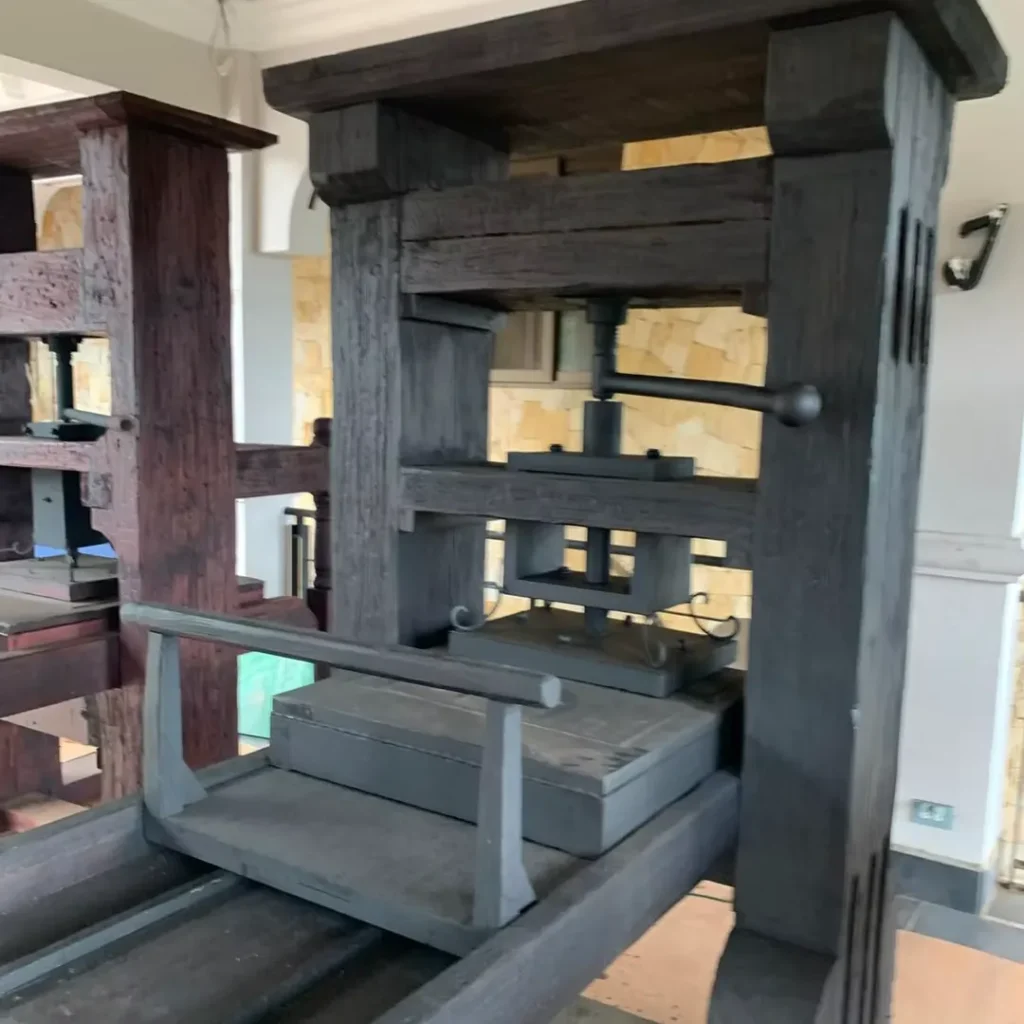
- Printing the Image A sheet of paper was placed over the block and pressed by hand or with simple tools, transferring the inked design onto the paper.
Materials and Craftsmanship
Woodblocks were typically made from fine-grained wood that could hold detailed carvings. Tools included knives, chisels, and brushes for applying ink.
This technique required a high level of artistic skill, especially when producing detailed illustrations or calligraphic texts. In some regions, multiple blocks were used to apply different colors, creating vibrant, multi-layered prints.
Cultural and Historical Impact
Woodblock printing played a crucial role in the spread of knowledge, religion, and art. It was widely used to produce:
- Religious texts and images
- Educational materials
- Decorative prints and illustrations
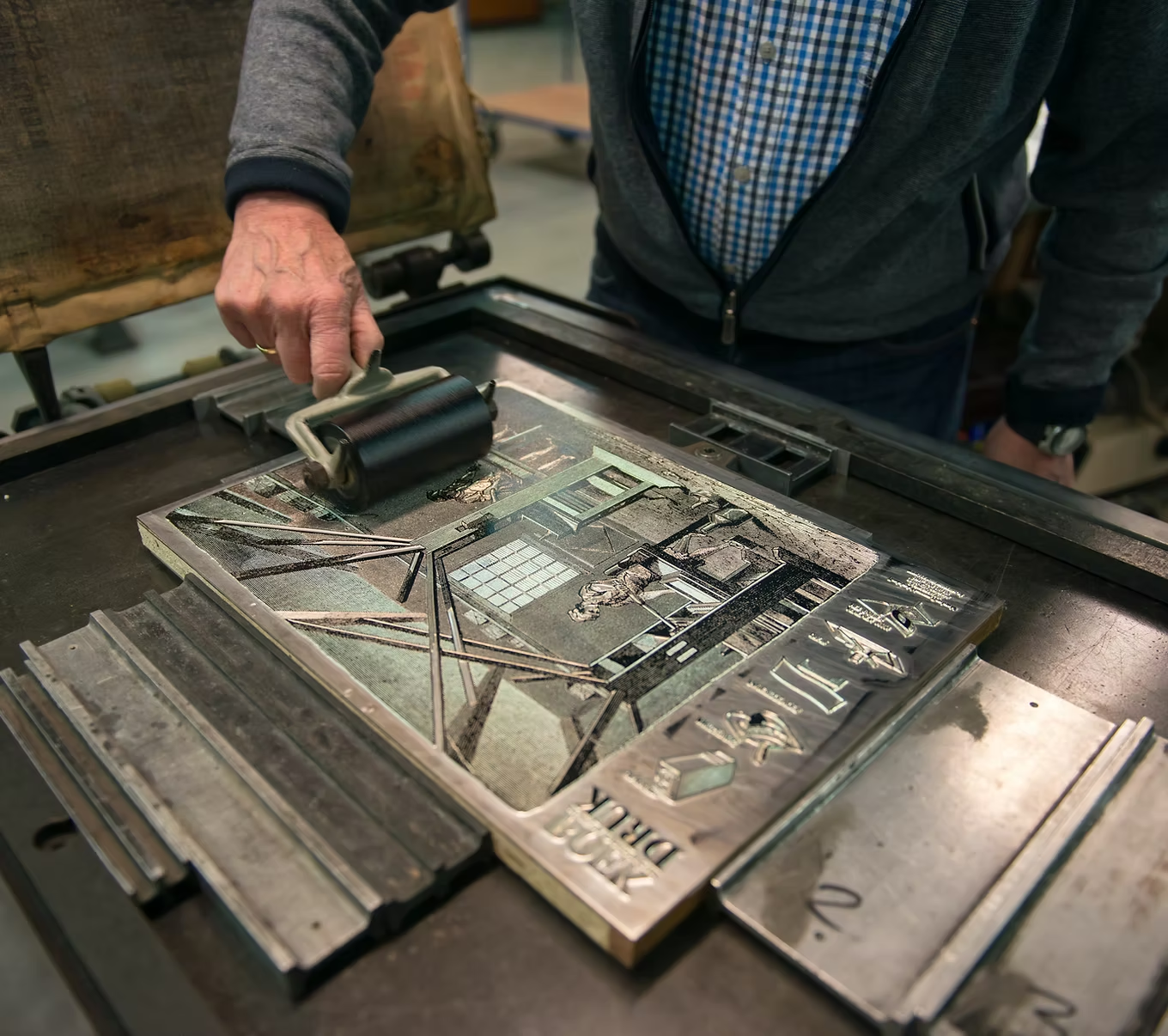
Woodblock to Movable Type
While woodblock printing was revolutionary, it had limitations. Each page required a separate carved block, making it time-consuming to produce new texts. This challenge eventually led to innovations such as movable type, which allowed for greater flexibility and efficiency.

Final Reflection for Visitors
Woodblock printing represents the beginning of humanity’s ability to reproduce ideas on a large scale. Through carved wood and careful craftsmanship, early printers transformed knowledge into something that could be shared, preserved, and experienced by many.