

F- Paper Cutters
Paper Cutters
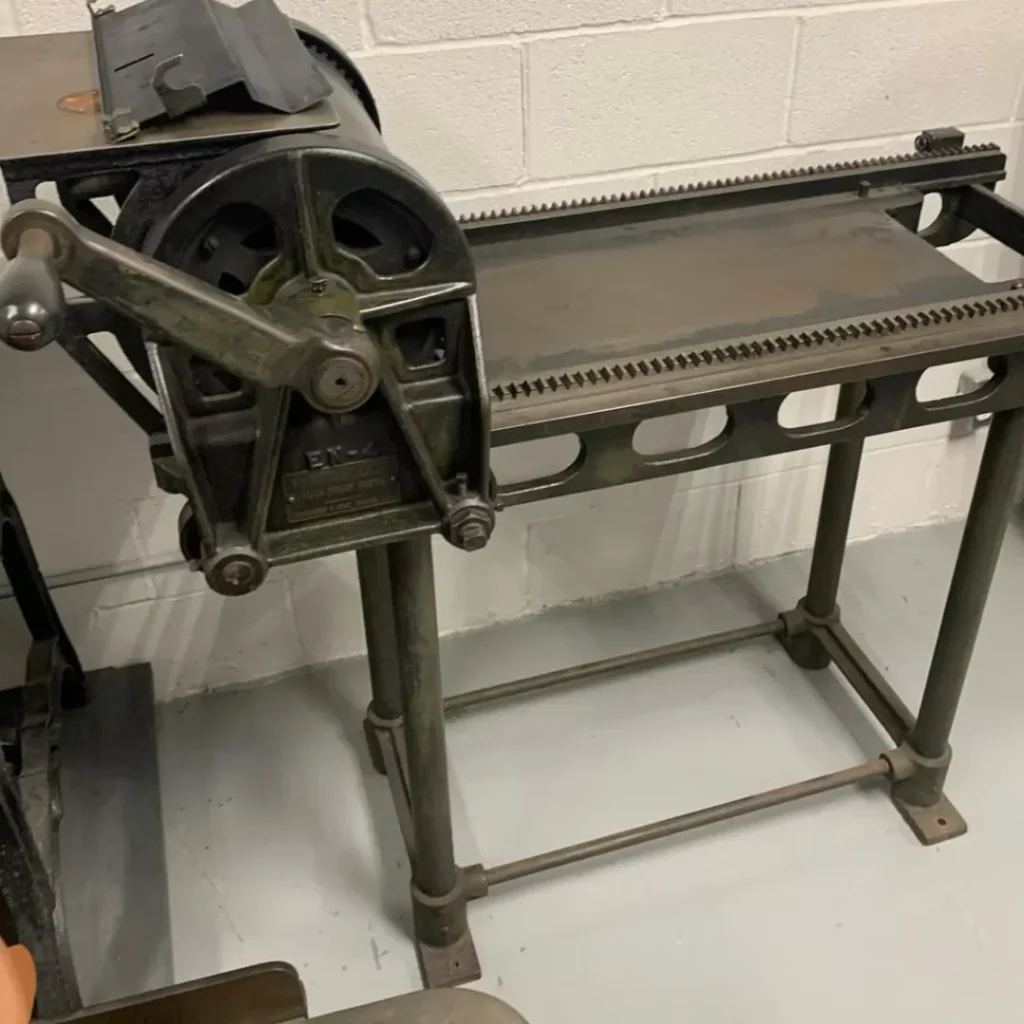
Paper cutters played an essential role in the printing process by helping printers prepare clean, accurate sheets for books, newspapers, posters, flyers, and other printed materials. Before a project could be completed, paper often needed to be trimmed to the proper size, squared for alignment, or cut into finished pieces ready for binding, folding, or distribution.
Early paper cutters required strength, precision, and careful attention. Whether operated by hand lever, blade, or mechanical action, these tools helped create smooth edges and consistent dimensions. A clean cut was more than a finishing detail. It affected how printed materials looked, stacked, folded, and functioned.
As printing businesses grew, paper cutters became increasingly important to efficiency and quality. They helped printers move from raw or oversized sheets to polished finished products. Books, business forms, programs, invitations, posters, and publication pages all depended on accurate cutting as part of the production process.
At Demers, Gutenberg, Franklin Museum, paper cutters help visitors understand that printing history includes much more than presses and ink. Every finished printed piece passed through many stages, and paper cutting was one of the key steps that turned printed sheets into useful, professional materials.
Gallery
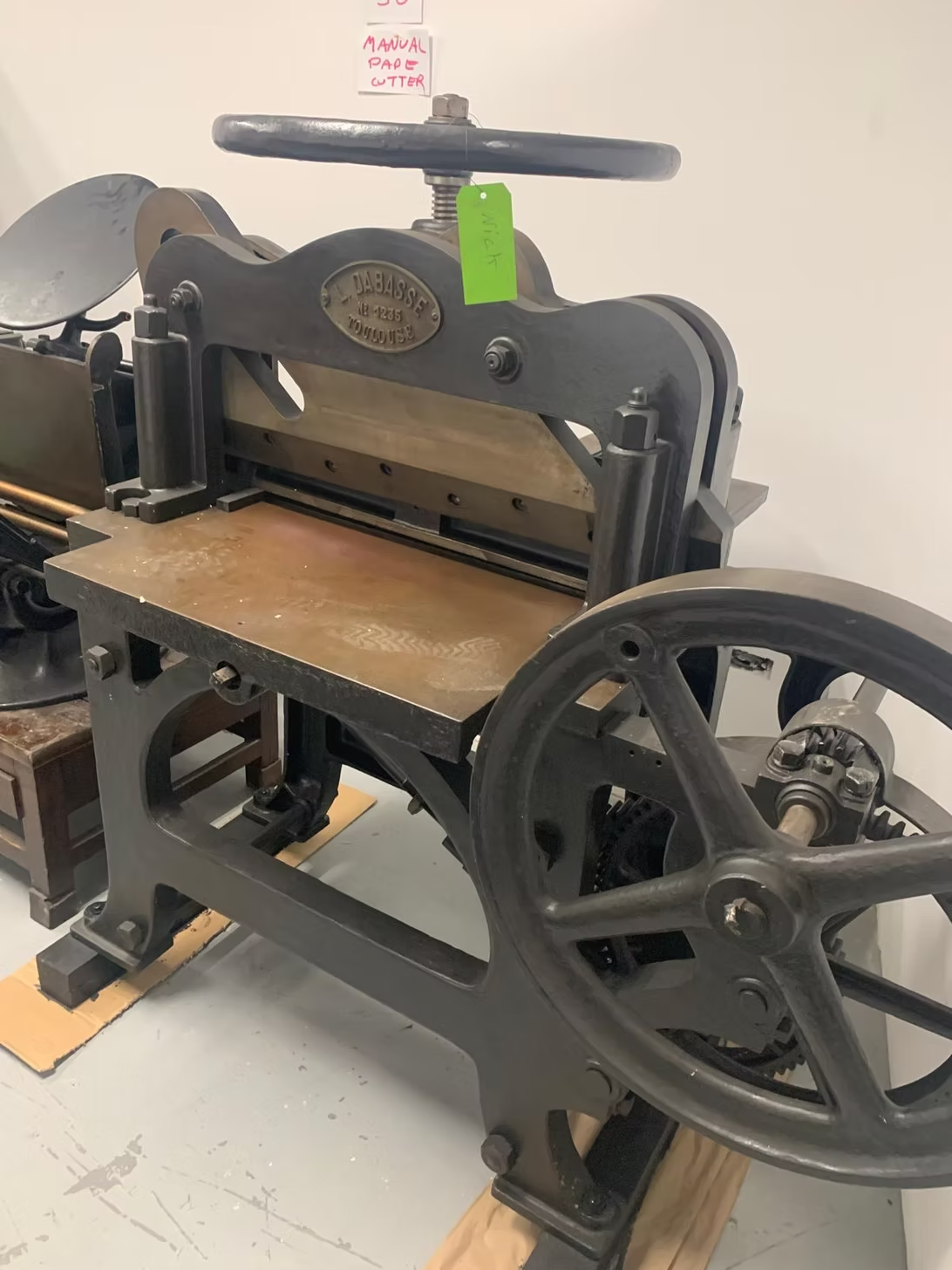
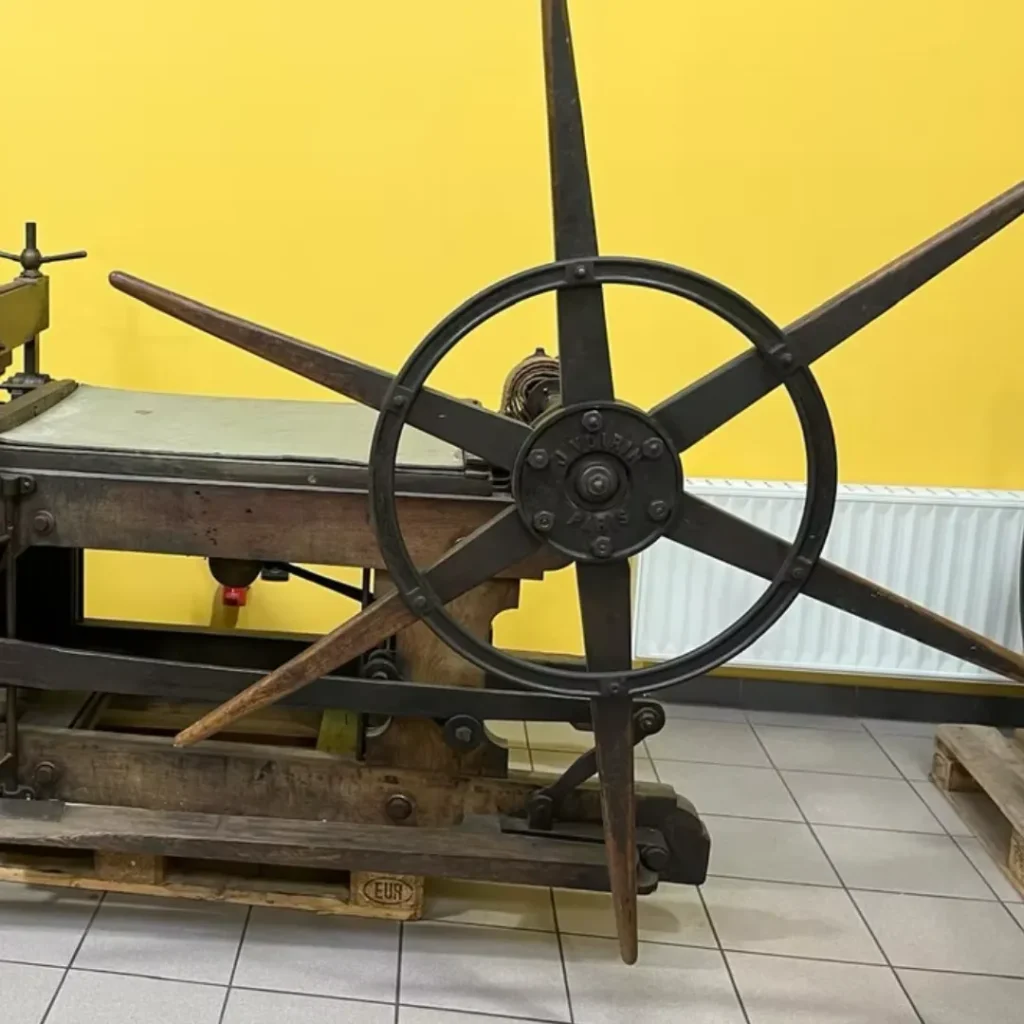
6-F-4 Cerca 1870, hand cutter, Dabasse , paris, France
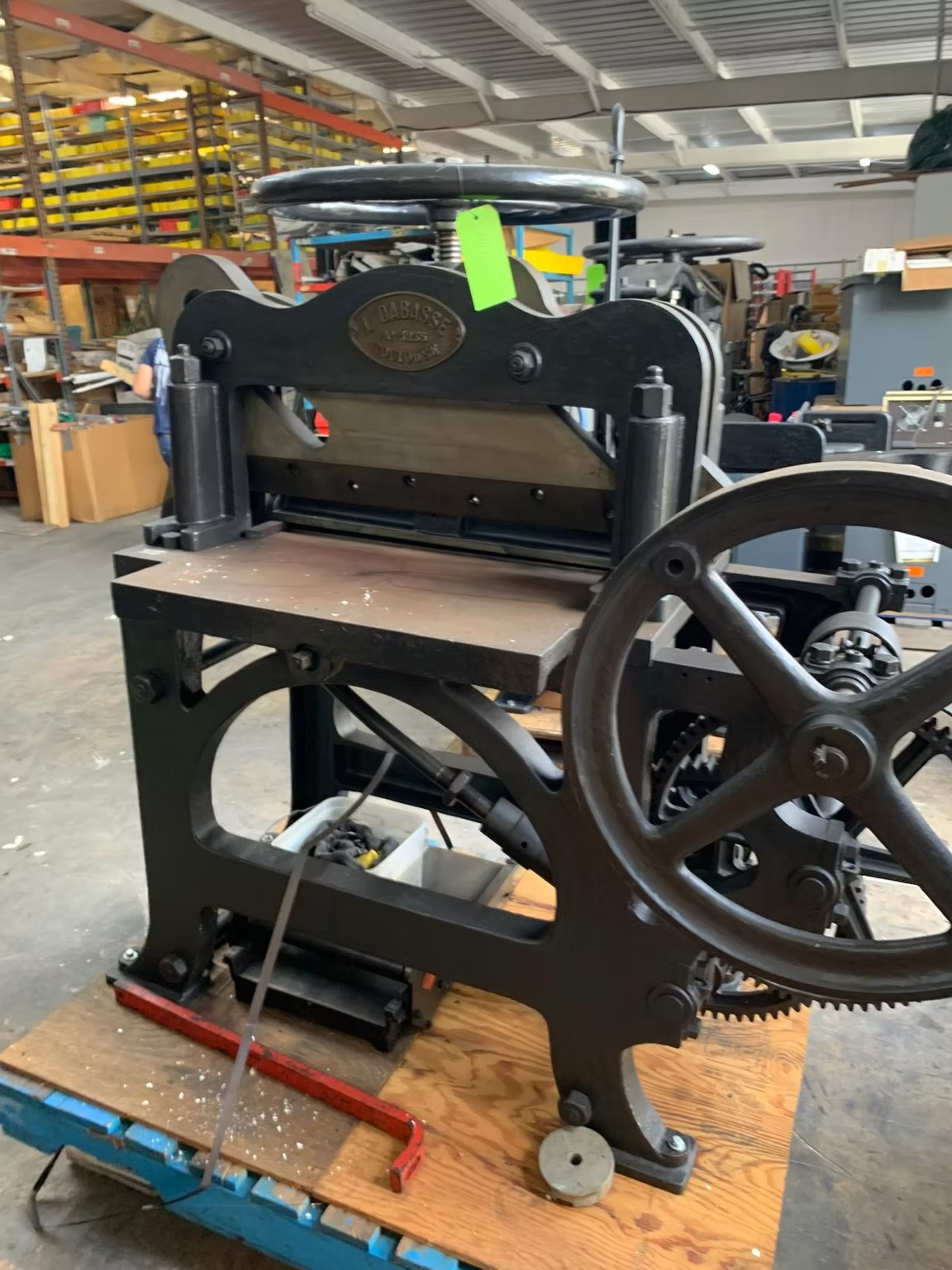
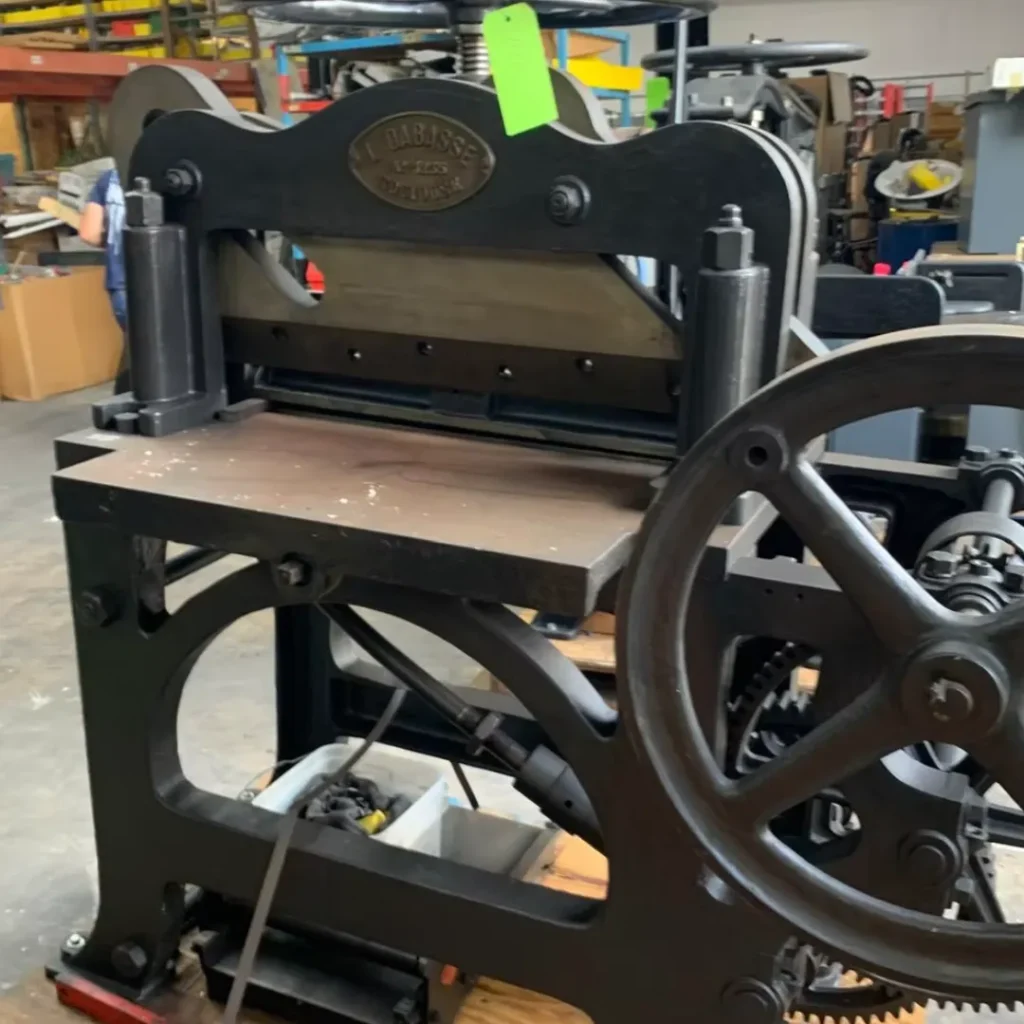
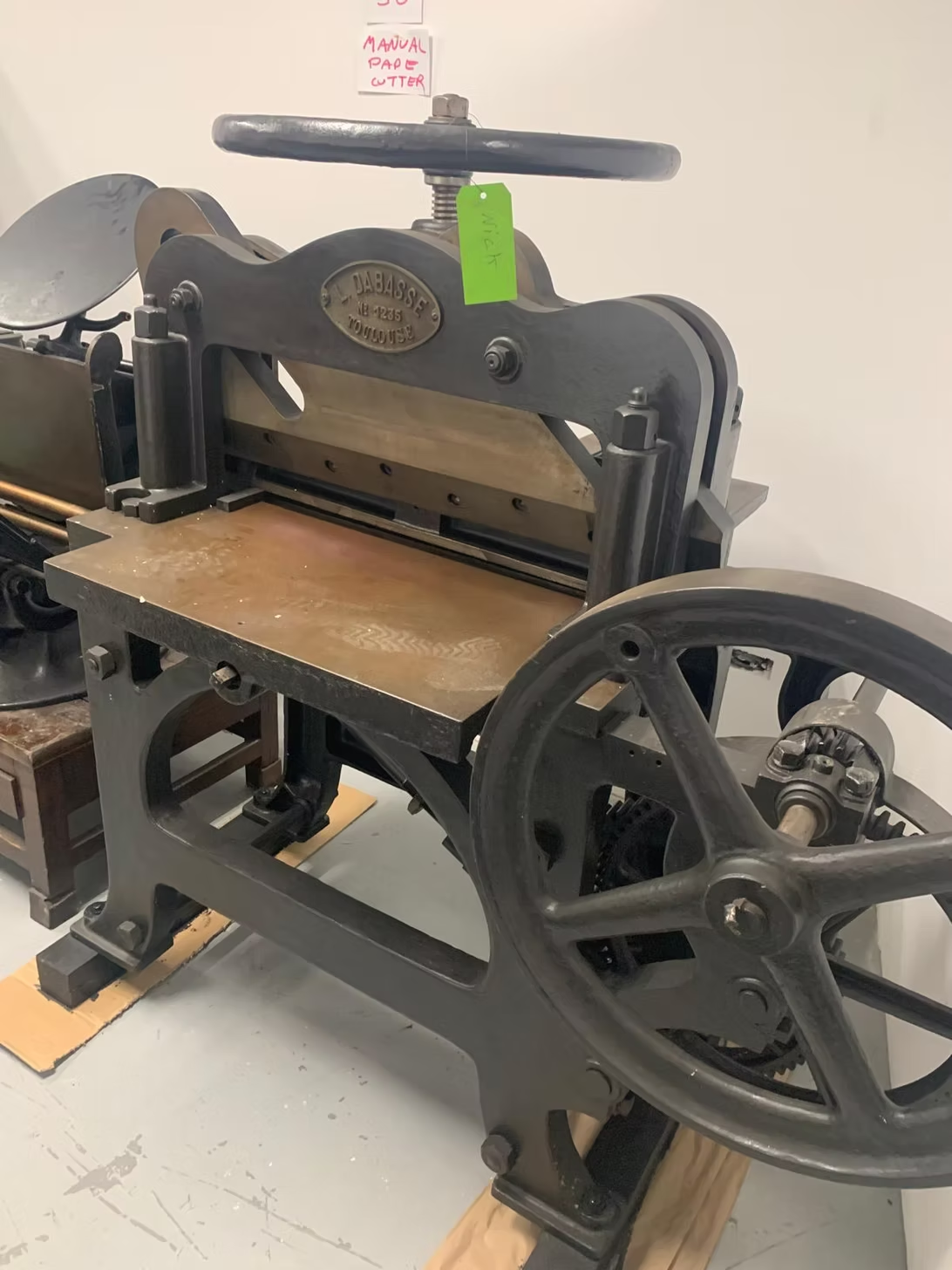
6-F-1 Cerca 1840, L Dabasse # 1235, Manual cutter Toulouse, France
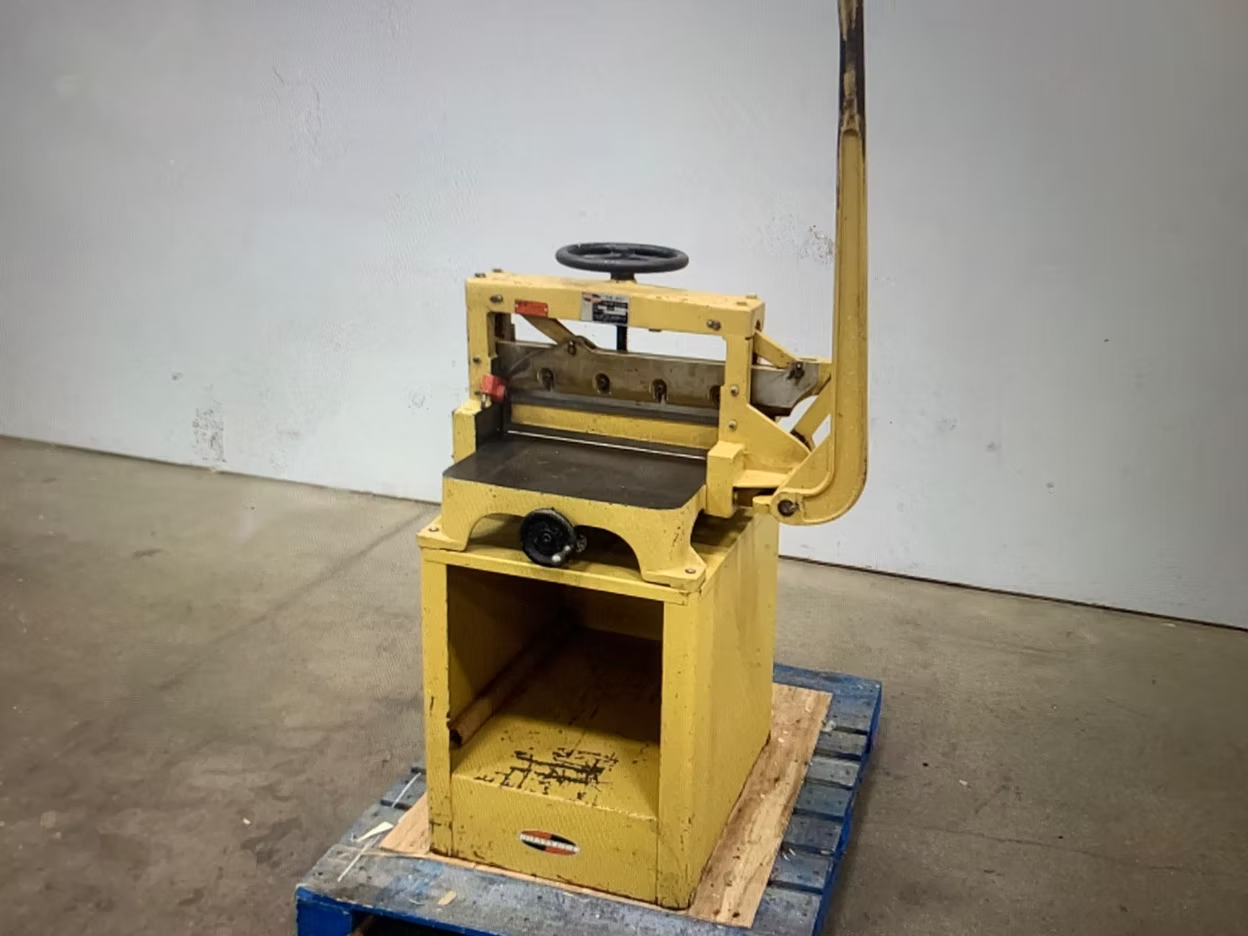
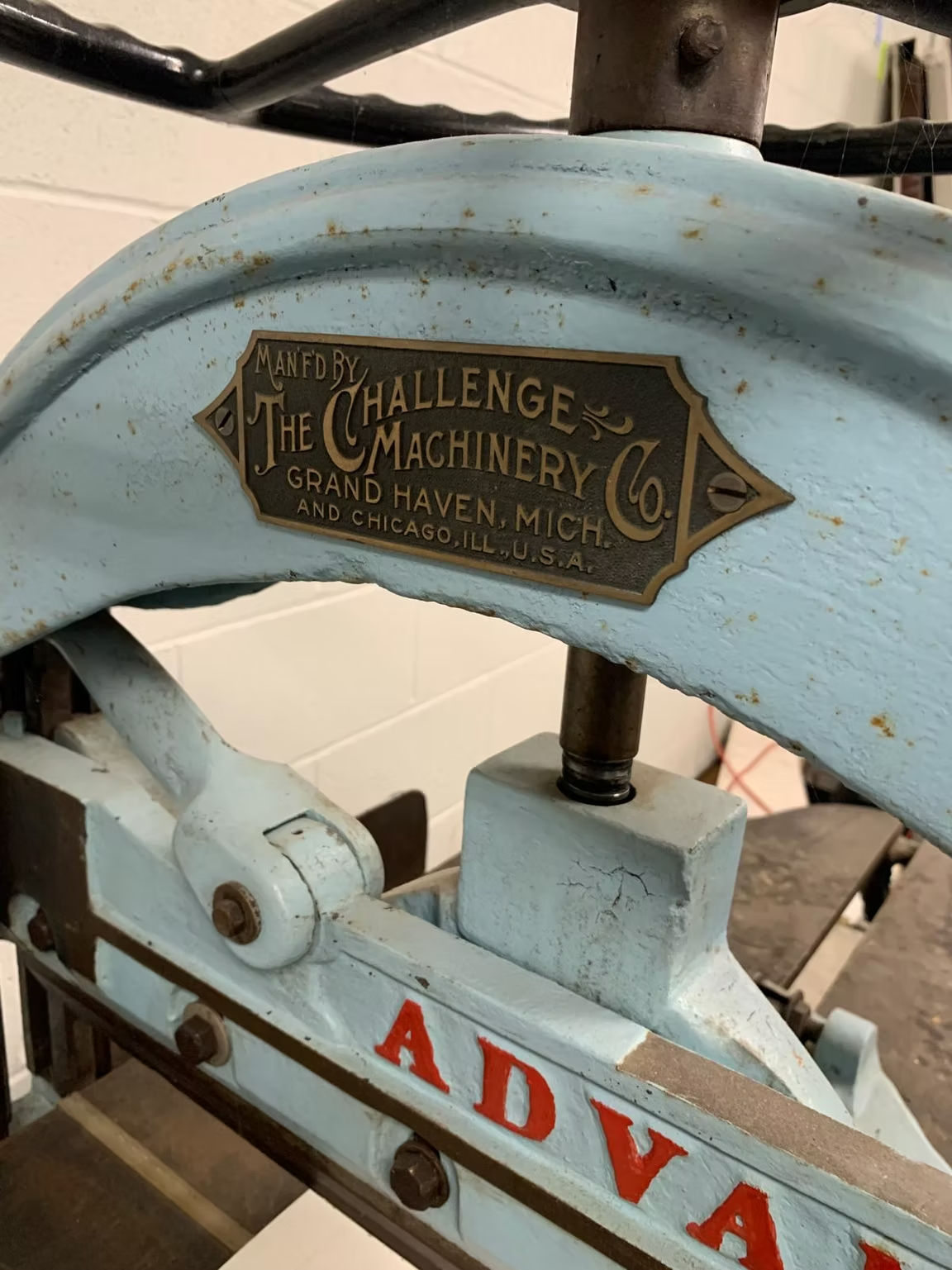
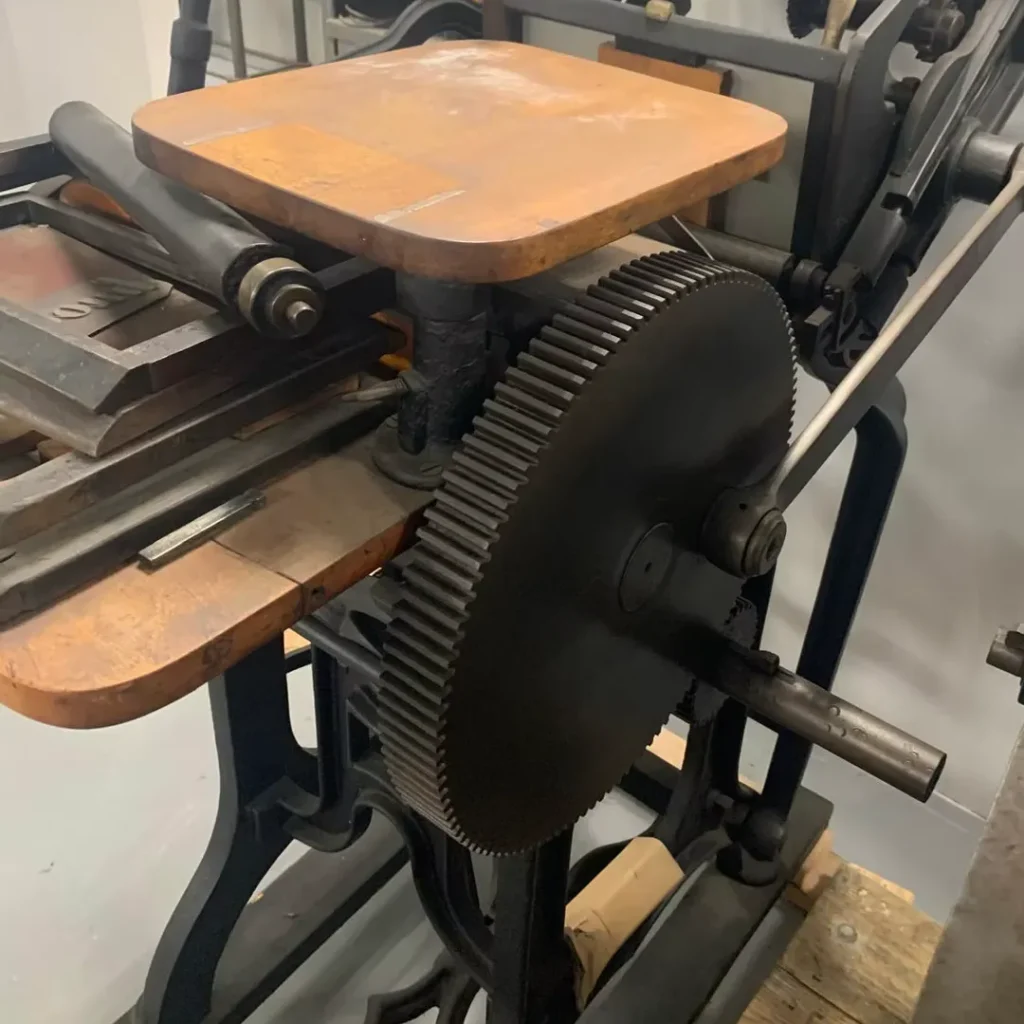
6-F-2 Cerca 1961, challenge HL 193, manual cutter , grand haven , Michigan U.S.A.
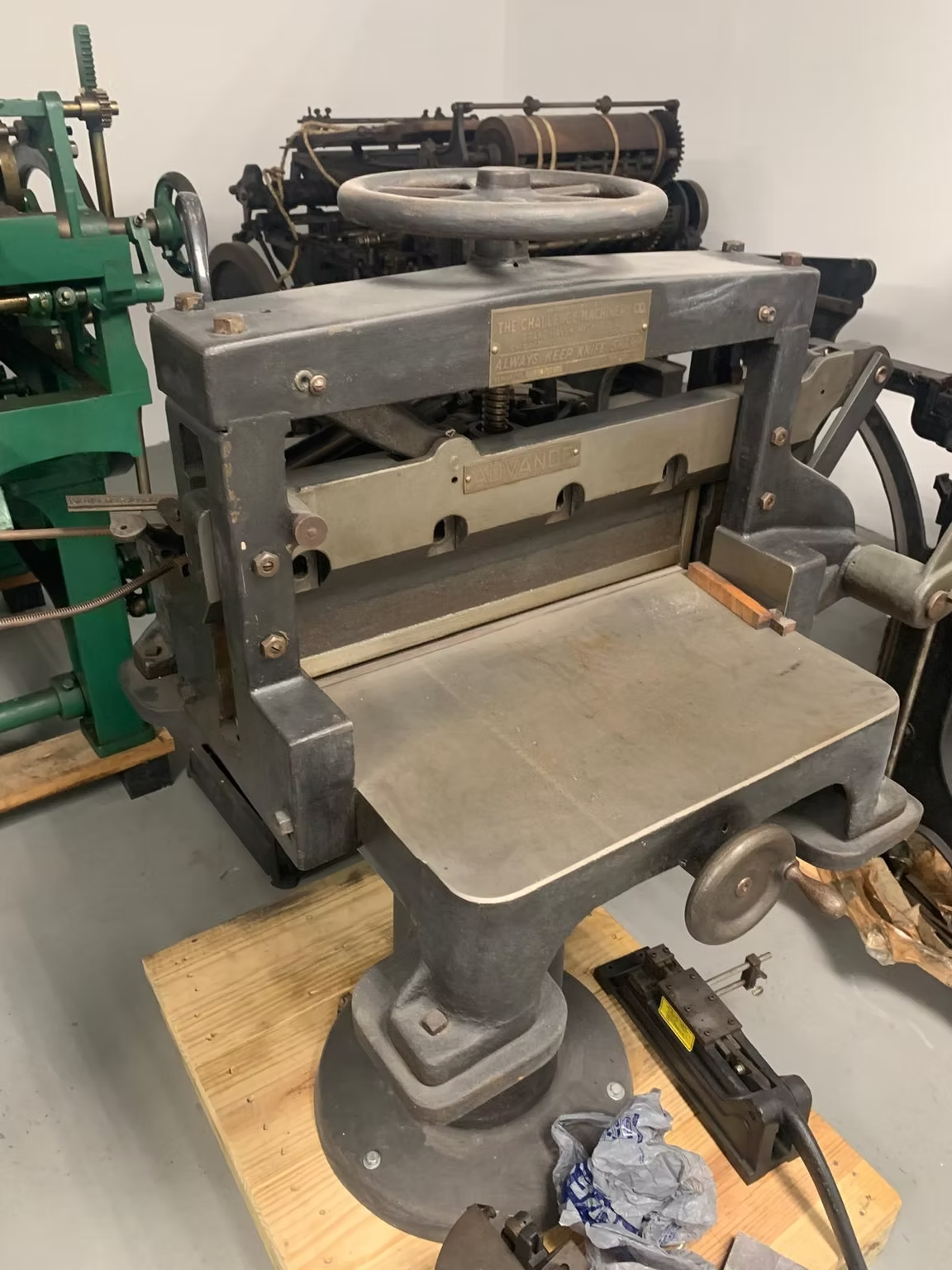
6-F-3 Cerca 1860, Advance :challenge , size 19” , heavy duty grande Haven, mich
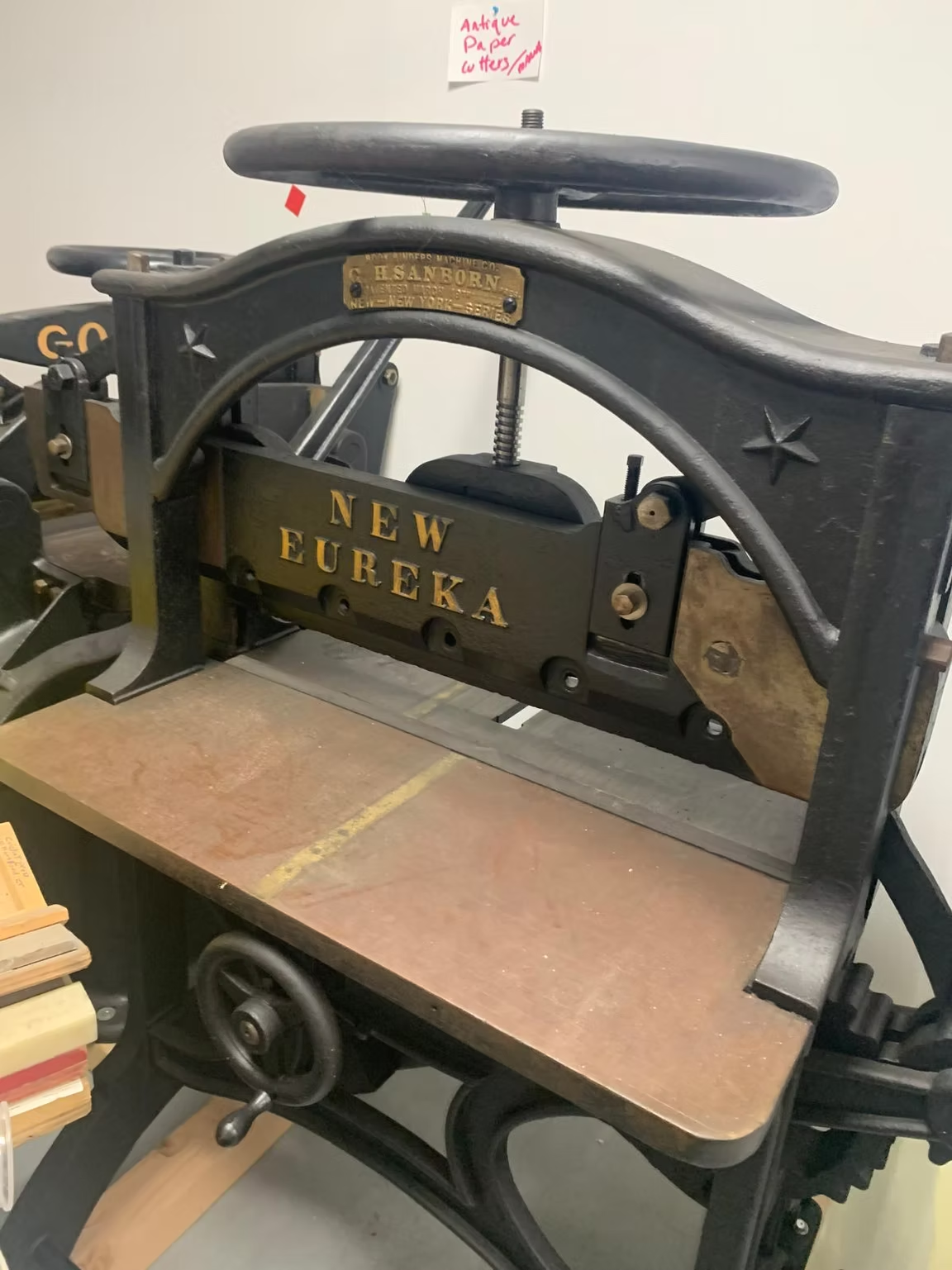
6-F-5 Cerca 1890, new eureka , hand cut , Shanghai screen Mach , China
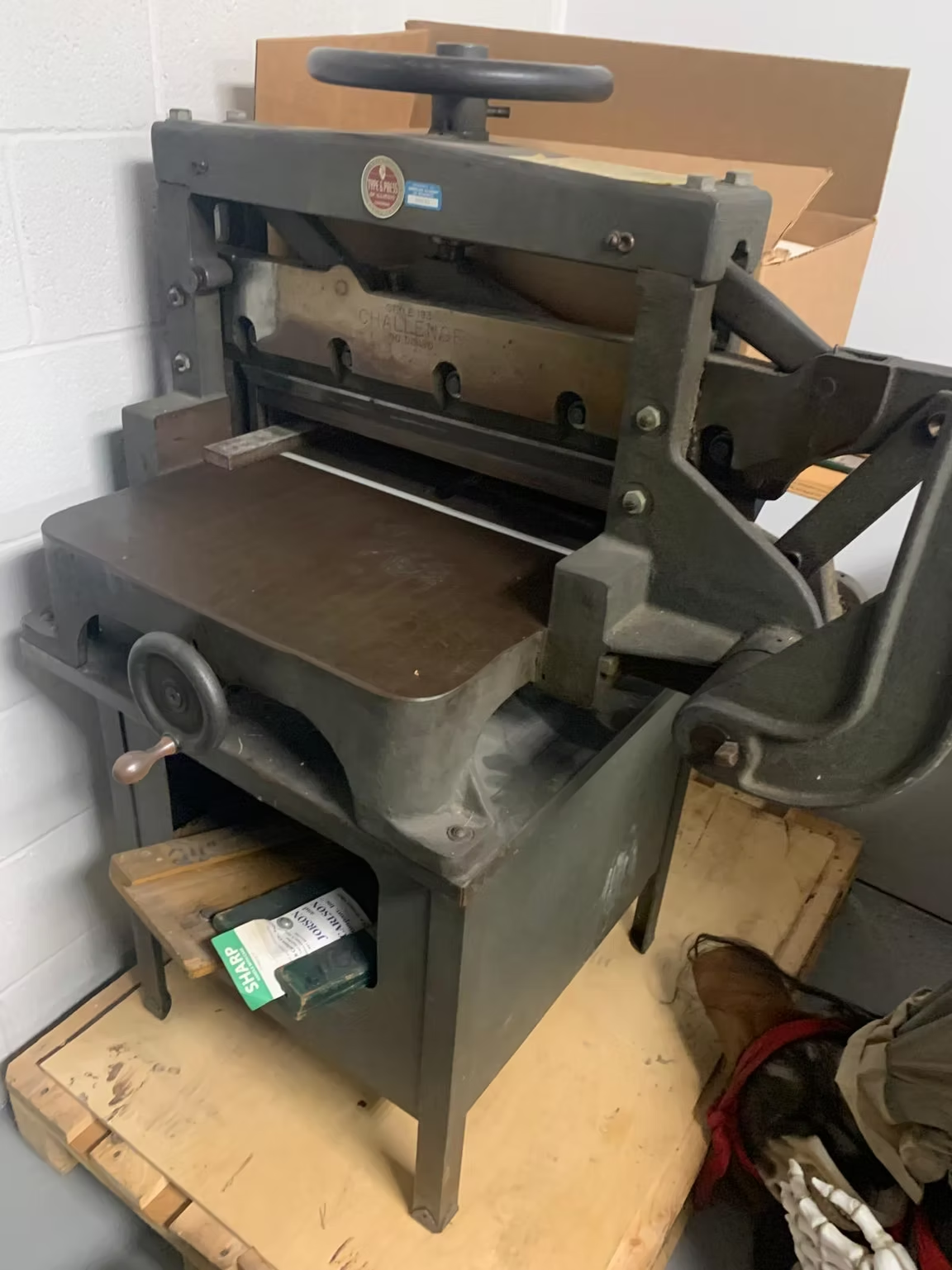
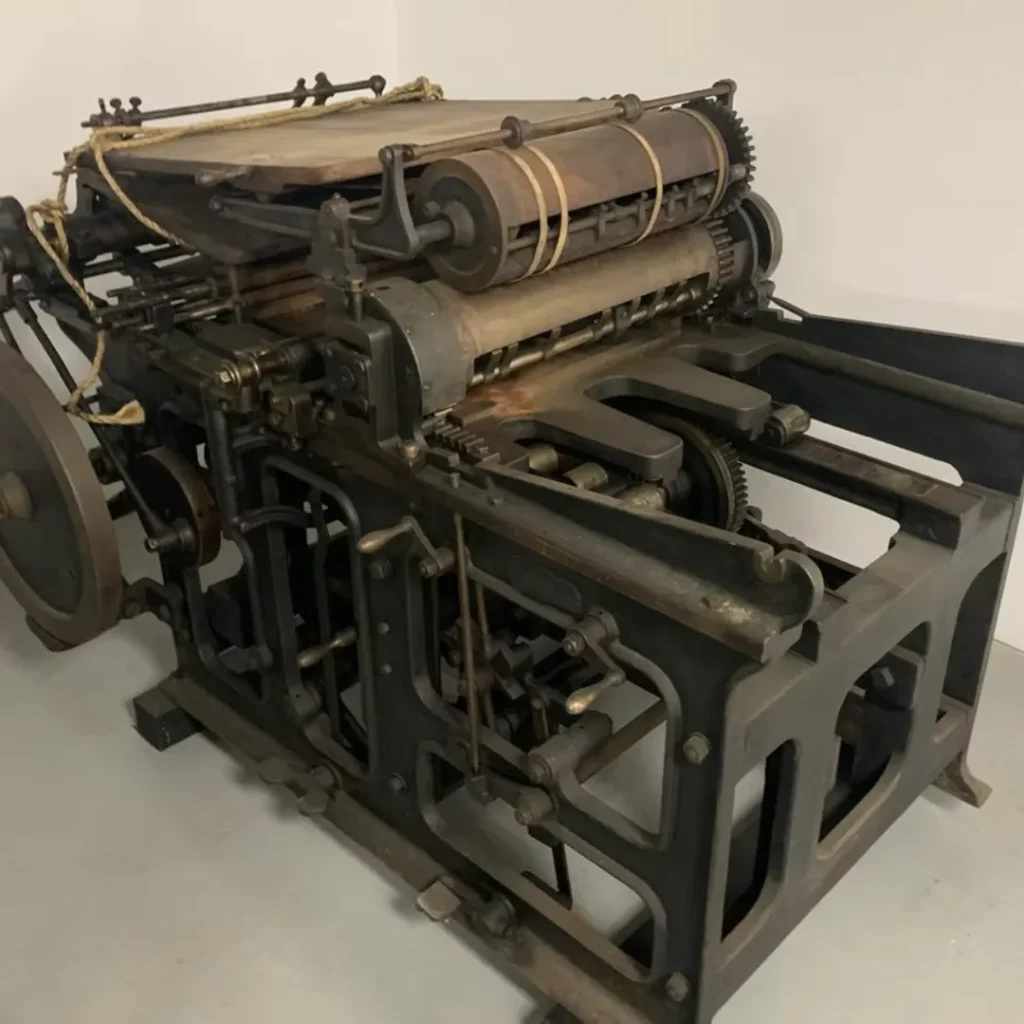
6-F-6 Cerca 1910, challenge p style 193, type -& press of chi
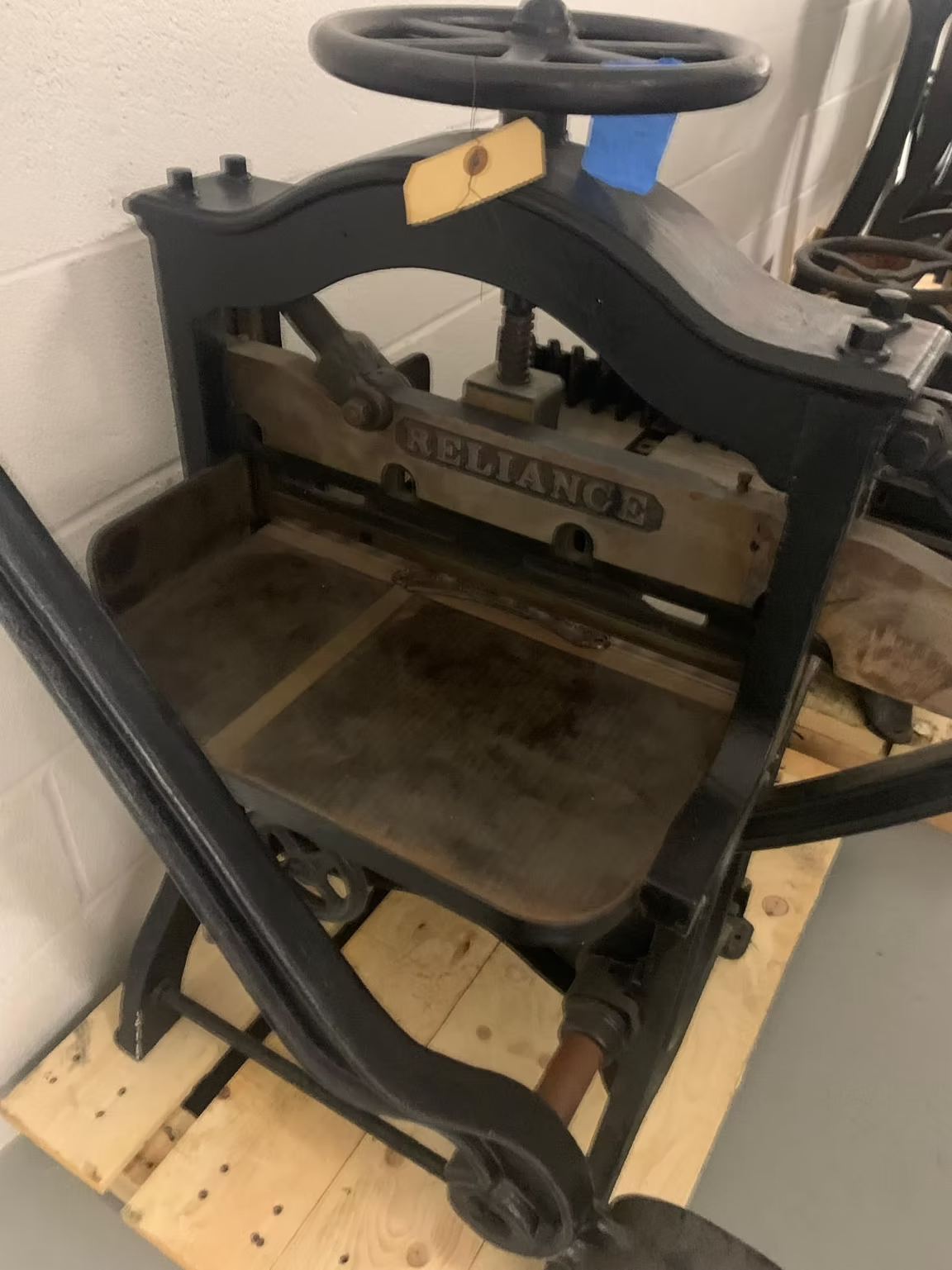
6-F-7 Cerca 1880, reliance manual cut , Chicago
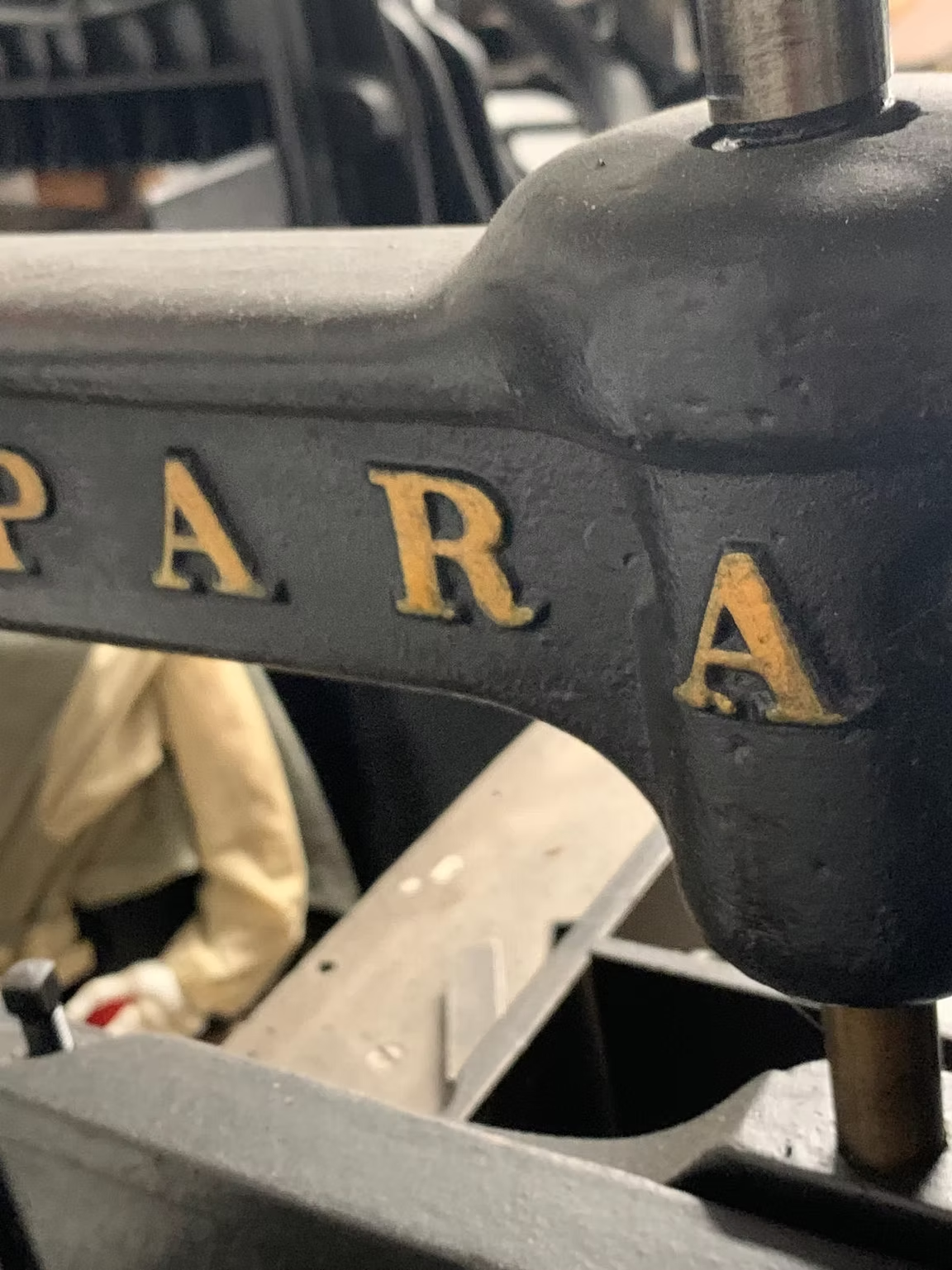
6-F-8 Cerca 1890 USA
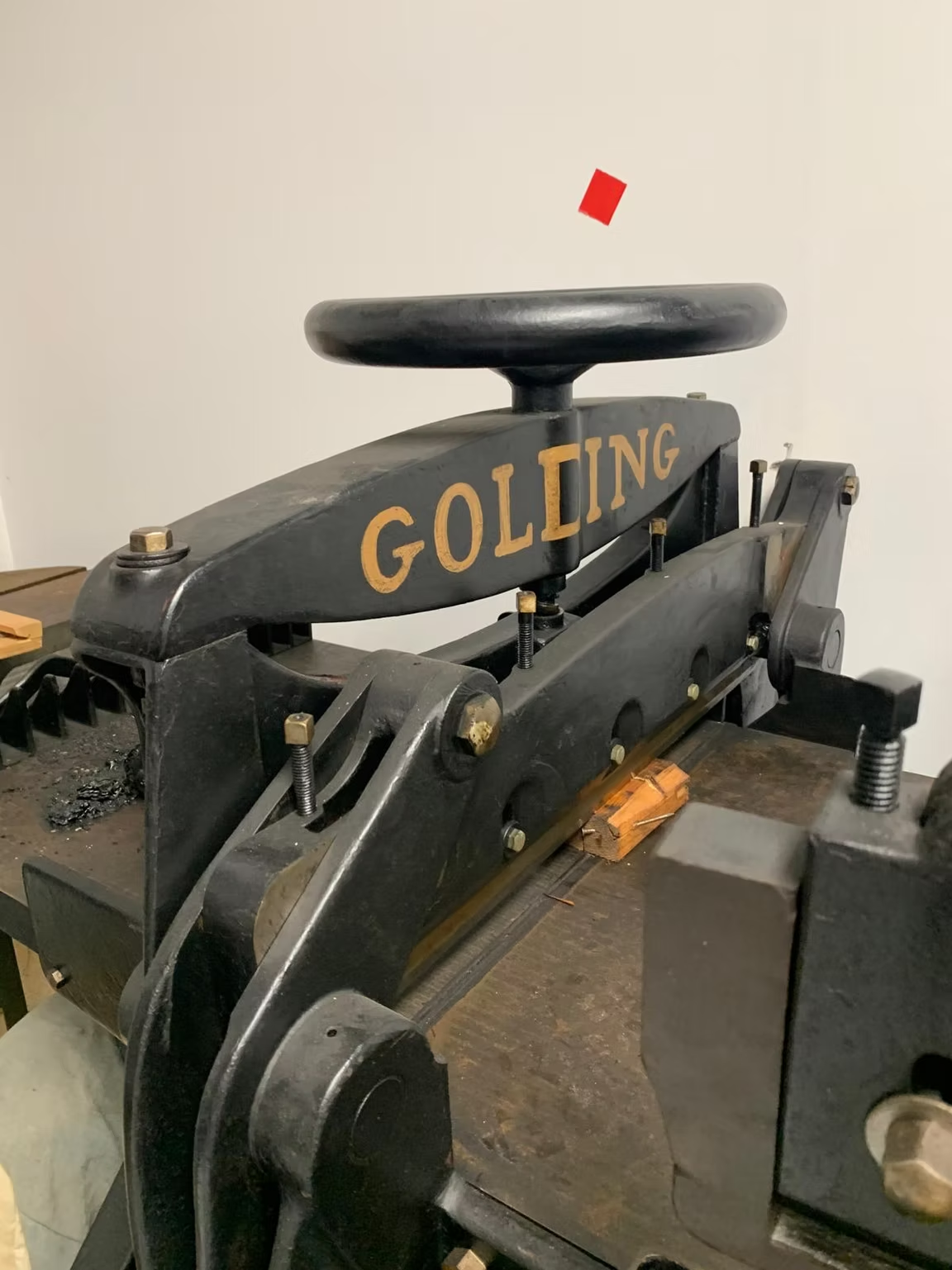
6-F-9 Cerca 1885, Pearl, side Cut c Boston , mass
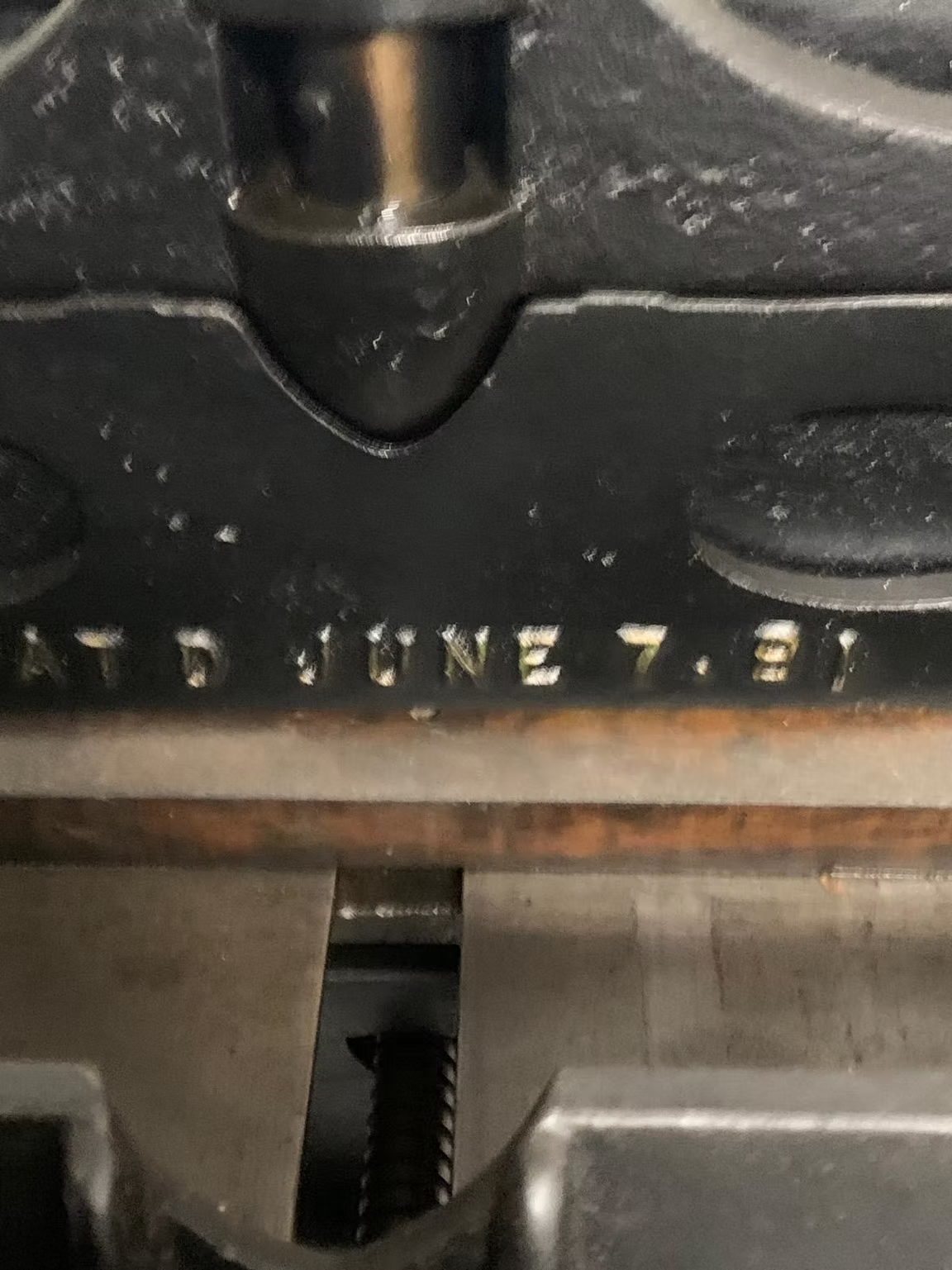
6-F-10 cerca 1870, unknown
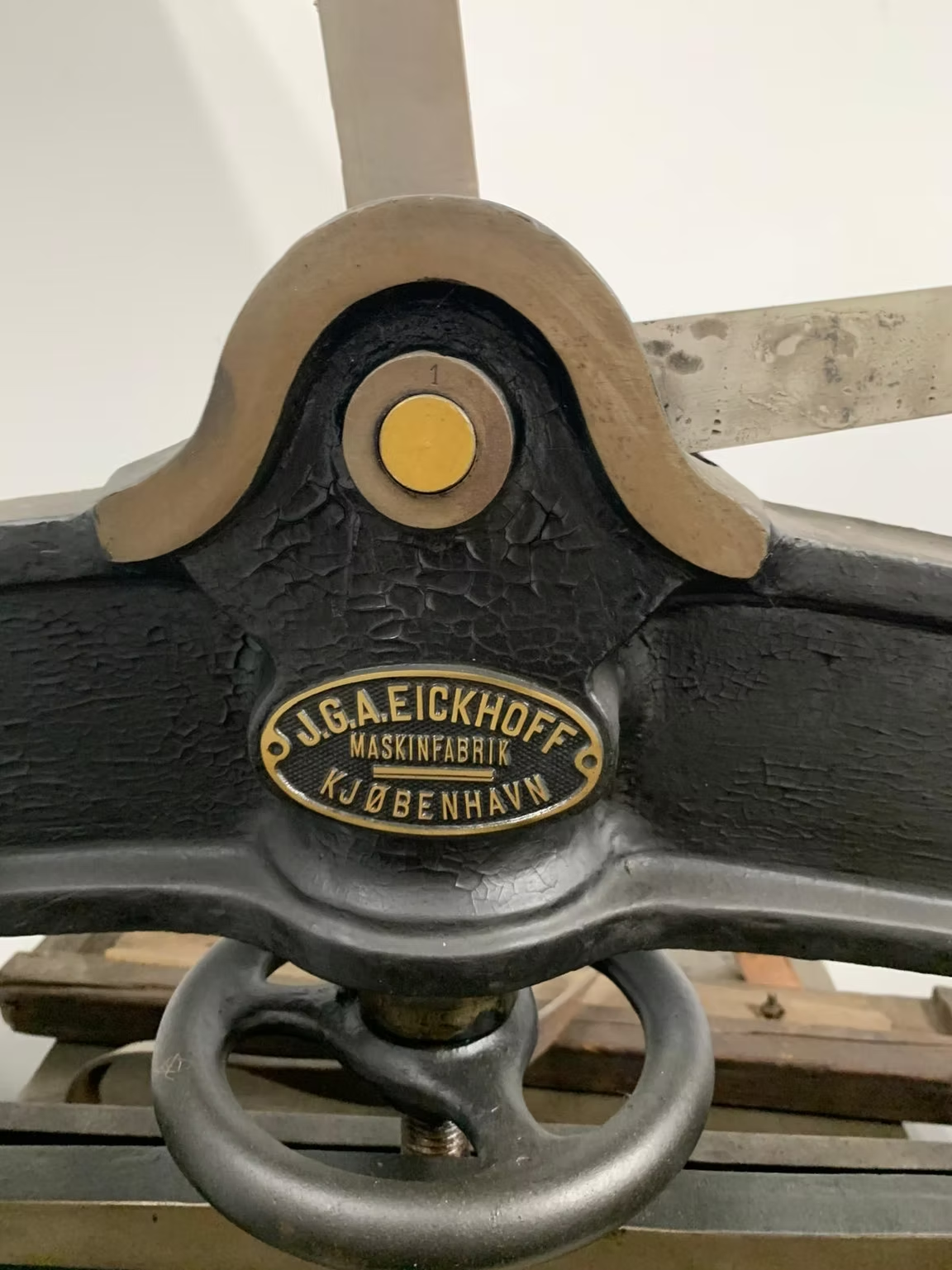
6-F-11 Cerca 1880, manual cut , J.G.A. Eichkoff, Copenhagen ,Denmark